
Improve Learning & Development Effectiveness Through Customized Training and Microlearning
In today’s rapidly evolving workplace, learning is no longer an optional activity. It is a business necessity.
Technology is changing faster than ever, job roles are continuously evolving, and employees are expected to adapt to new tools, processes, and responsibilities throughout their careers. Organizations that fail to invest in employee development often struggle with productivity, engagement, retention, and innovation.
This is why Learning & Development (L&D) has become a strategic priority for forward-thinking organizations.
However, modern employees do not learn the same way they did a decade ago. Lengthy classroom sessions, generic training modules, and one-size-fits-all programs often fail to deliver meaningful outcomes. Today’s workforce expects learning experiences that are personalized, relevant, engaging, and accessible when needed.
This is where customized training and microlearning are transforming the future of workplace learning.
Understanding Learning and Development
Learning and Development is a comprehensive approach to improving employee capabilities, performance, and long-term career growth.
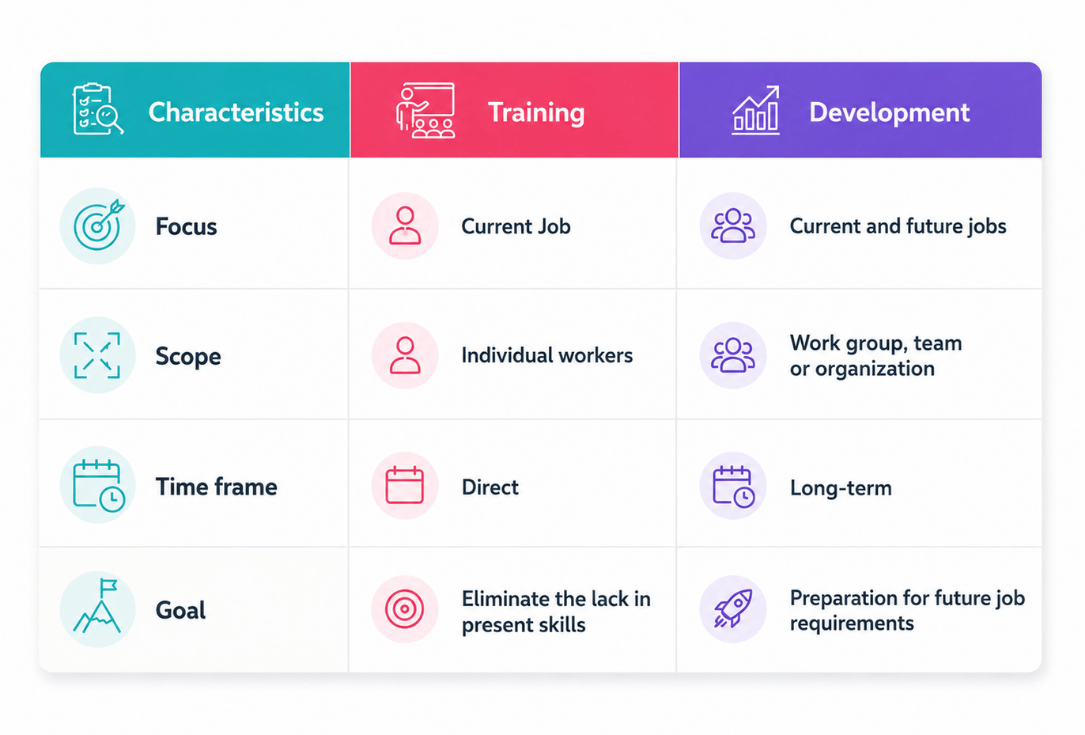
While training often focuses on immediate skill acquisition for a specific task, Learning & Development takes a broader perspective. It helps the employees to work better, build knowledge, strengthen competencies, develop leadership capabilities, and prepare for future responsibilities.
Training typically addresses current job requirements, while development prepares employees for future opportunities.
Organizations that invest in Learning & Development aremore likely to:
- Improve employee performance
- Increase workforce agility
- Strengthen retention rates
- Build future leaders
- Enhance employee engagement
- Support business transformation initiatives
In an environment where skills become outdated quickly, continuous learning has become one of the most important drivers of organizational success.
Why Traditional Learning Programs Often Fall Short
Many organizations still rely on standardized training programs that deliver the same content to every employee regardless of role, experience, or learning needs.
While these programs may satisfy compliance requirements, they often struggle to create meaningful behavior change.
Common challenges include:
- Information overload
- Low engagement levels
- Poor knowledge retention
- Generic content
- Limited personalization
- Lack of measurable outcomes
Modern learners want learning experiences that fit naturally into their workflows and address real-world challenges they face every day.
This shift has accelerated the adoption of microlearning and customized learning solutions.
What Is Microlearning?
Microlearning is a modern learning methodology that delivers knowledge in short, focused, and easily consumable formats. This approach supports skill-based learning by breaking complex topics into smaller modules that employees can absorb and apply quickly.
Instead of requiring employees to sit through hours of training, microlearning breaks complex topics into smaller learning units that can be completed in minutes.
Examples include:
- Short videos
- Interactive modules
- Infographics
- Knowledge cards
- Quick assessments
- Podcasts
- Simulations
- Scenario-based exercises
The goal is to provide employees with the right information at the right time. In today’s hybrid work environment, employees increasingly prefer learning experiences that fit naturally into their workflow rather than requiring dedicated classroom sessions. This shift has made Microlearning one of the most effective methods for knowledge delivery and skill development.
Microlearning aligns closely with how people naturally consume information today. Employees can access learning content on demand and immediately apply new knowledge to their work.
Why Microlearning Works
Modern employees are constantly balancing meetings, projects, communication, and deadlines.
As a result, attention spans are limited and learning time is often fragmented.
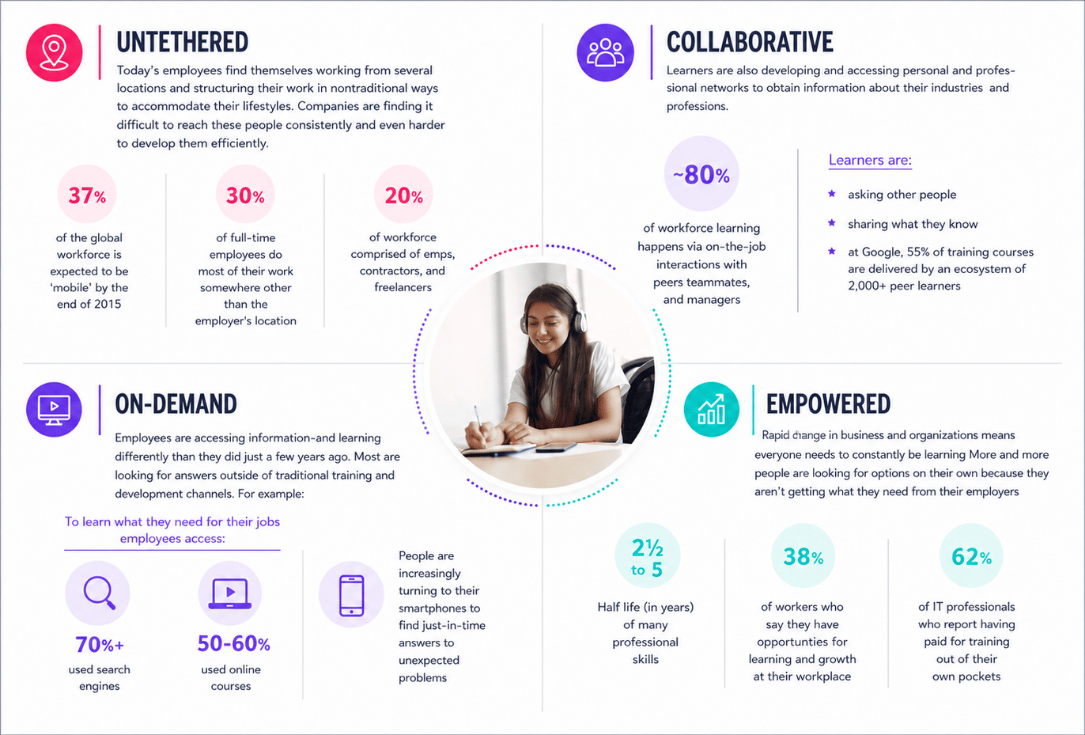
Because Microlearning focuses on one concept at a time, employees can learn faster, retain information more effectively, and apply knowledge immediately in their day-to-day responsibilities.
Microlearning addresses these challenges by making learning:
Easier to Consume
Short learning modules reduce cognitive overload and allow employees to focus on one concept at a time.
Easier to Retain
Smaller learning segments improve knowledge retention and recall compared to lengthy training sessions.
Easier to Access
Employees can access learning resources whenever needed, whether they are working remotely, in the office, or on the move.
Easier to Apply
Because learning content focuses on specific problems and tasks, employees can immediately apply knowledge in real-world situations.
This combination of accessibility, relevance, and practicality makes microlearning one of the most effective learning strategies available today.
The Role of Customized Training in Learning Effectiveness
While microlearning improves delivery, customization improves relevance.
Every organization has unique goals, challenges, technologies, processes, and skill requirements. Yet many companies continue to use generic learning content that fails to address their specific needs.
Customized training takes a different approach.
Instead of delivering standard content to everyone, customized learning programs are designed around:
- Organizational goals
- Employee skill gaps
- Business priorities
- Industry requirements
- Job-specific competencies
- Career development pathways
This ensures that employees learn what is most relevant to their roles and future growth.
Customized learning also creates stronger engagement because employees can clearly see the value of the content they are consuming. Organizations are also moving toward skills-based workforce development, where learning initiatives are directly linked to measurable business outcomes, role readiness, career progression, and organizational capability building.
Introducing LUMA: AI-Powered Learning and Development
As organizations rethink workplace learning, Talent Titan’s LUMA is helping transform how companies approach employee development.
LUMA is Talent Titan’s AI-powered Learning & Development Agent, designed to help organizations identify skill gaps, build personalized learning journeys, automate training recommendations, and continuously improve workforce capabilities.
As part of Talent Titan’s HIRA Agentic AI ecosystem, LUMA works alongside specialized AI agents to ensure that learning and workforce development remain aligned with hiring needs, business objectives, and future workforce requirements.
Rather than treating learning as a one-time event, LUMA enables continuous growth through intelligent recommendations, adaptive learning pathways, and data-driven insights.
The platform helps organizations move beyond traditional training models and build a culture of continuous learning.
How LUMA Enhances Learning Effectiveness
AI-Driven Skill Gap Analysis
One of the biggest challenges in Learning & Development is identifying what employees actually need to learn.
LUMA uses intelligent assessments and analytics to identify existing skill gaps across teams and individuals.
This enables organizations to create targeted learning interventions rather than relying on assumptions.
Using assessment data, performance insights, and workforce analytics, LUMA can proactively identify emerging skill gaps before they impact business performance.
Personalized Learning Paths
Not every employee requires the same training.
LUMA creates customized learning journeys based on role requirements, career aspirations, current competencies, and organizational priorities.
This ensures employees receive relevant content that supports both individual growth and business goals.
Unlike traditional Learning Management Systems that assign the same content to everyone, LUMA dynamically adapts learning pathways based on employee progress, engagement levels, and evolving business needs.
Microlearning at Scale
LUMA enables organizations to deliver bite-sized learning experiences that fit naturally into employees’ daily workflows.
Whether employees need technical training, leadership development, compliance learning, or soft-skill enhancement, content can be delivered in easily consumable formats that improve engagement and retention.
The platform can transform existing learning content, including presentations, videos, documents, and training materials, into bite-sized microlearning modules that improve completion rates and knowledge retention.
Continuous Learning and Upskilling
Workplace skills are evolving rapidly.
LUMA helps organizations build future-ready workforces by supporting ongoing upskilling and reskilling initiatives across departments and job functions.
As technologies, business models, and customer expectations evolve, organizations need employees who can continuously learn and adapt. LUMA helps create a culture of lifelong learning by delivering relevant content at the right moment in an employee’s development journey.
Learning Analytics and Insights
One of the biggest limitations of traditional learning programs is the lack of measurable outcomes.
LUMA provides real-time analytics that help organizations monitor participation, engagement, skill progression, learning effectiveness, and business impact.
This enables L&D teams to continuously optimize learning strategies.
Advanced dashboards enable HR and L&D leaders to track learning effectiveness, identify high-potential talent, measure skill progression, and demonstrate ROI from learning investments.
Why Agentic AI Is Transforming Learning and Development
Traditional learning platforms typically focus on content delivery. Agentic AI takes learning a step further by actively supporting employee development.
LUMA functions as an intelligent L&D agent that can:
- Recommend learning based on skill gaps
- Personalize learning journeys
- Monitor progress and engagement
- Suggest reskilling opportunities
- Align learning with career pathways
- Support managers with workforce development insights
- Continuously optimize training effectiveness through AI-driven recommendations
This shift moves Learning & Development from a reactive function to a strategic business capability.
How to Incorporate Microlearning Into Your L&D Strategy
1. Identify Learning Needs
The first step is understanding where employees need support.
Conduct skill assessments, gather employee feedback, and analyze performance data to identify development opportunities.
AI-powered platforms like LUMA simplify this process through automated skill-gap identification and workforce analytics.
2. Create Relevant Content
Effective microlearning focuses on solving specific problems.
Content should be:
- Simple
- Relevant
- Visual
- Engaging
- Actionable
Short videos, interactive exercises, case studies, and gamified learning experiences often produce the best results.
3. Organize Content Effectively
Learning content should be easy to find and access.
Creating structured learning pathways helps employees quickly locate resources that support their current tasks and development goals.
4. Monitor and Improve Continuously
Learning should never be static.
Organizations should regularly review content effectiveness, gather feedback, analyze engagement data, and update learning materials to reflect changing business needs.
Where Can Microlearning Be Applied?
Microlearning is versatile and can support a wide range of organizational learning objectives.
Common use cases include:
- Employee onboarding
- Compliance training
- Product training
- Functional skill development
- Leadership development
- Soft-skills training
- Sales enablement
- Technology adoption
- Reskilling initiatives
- Customer service training
Because content is delivered in short, focused formats, employees can learn without disrupting productivity.
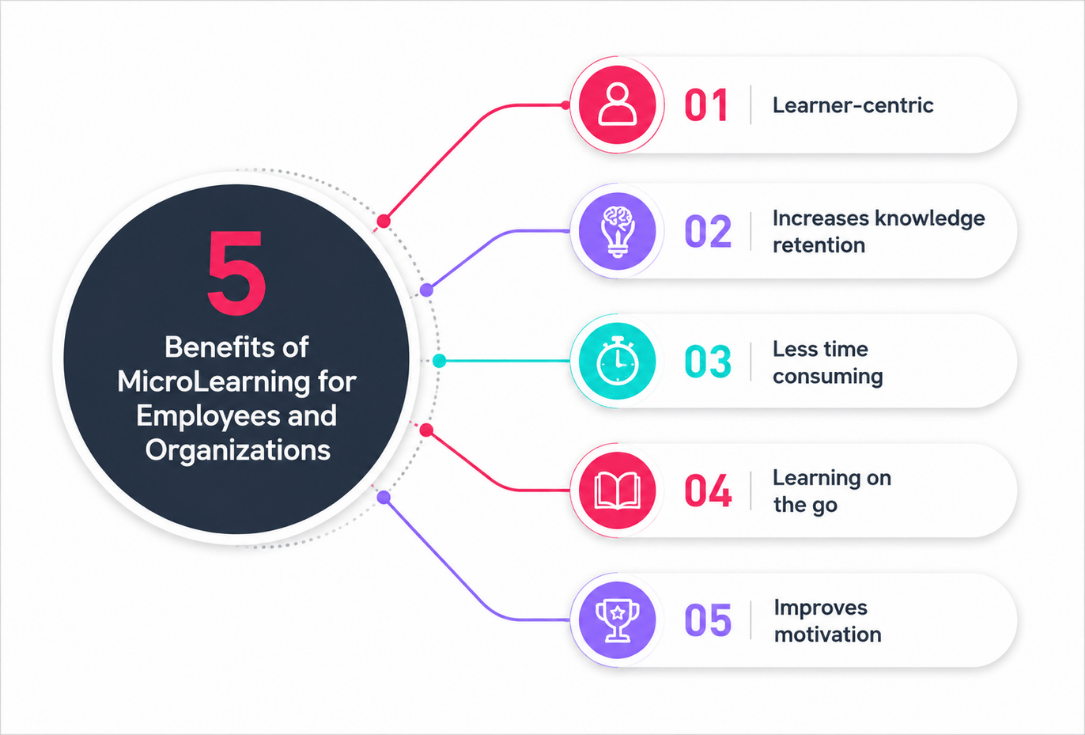
The Benefits of Customized Learning and Microlearning
Organizations that combine customization with microlearning often experience significant improvements in learning effectiveness.
Key benefits include:
Higher Engagement
Employees are more likely to complete learning programs that are relevant and easy to consume.
Improved Knowledge Retention
Short, targeted learning modules improve information retention and application.
Faster Skill Development
Employees gain practical skills more quickly through focused learning experiences.
Greater Flexibility
Learning can happen anytime, anywhere, and on any device.
Better Business Outcomes
When learning aligns with organizational objectives, it directly contributes to productivity, innovation, and performance improvement.
Improved Learning ROI
Organizations can measure learning outcomes more effectively and ensure that training investments directly contribute to business performance, employee growth, and workforce readiness.
The Future of Learning and Development
The future of workplace learning will be personalized, AI-powered, skills-driven, and continuously evolving.
Employees no longer want generic training programs that provide limited value. They want learning experiences that help them grow professionally, solve real-world challenges, and advance their careers.
Organizations that embrace intelligent learning platforms, personalized development pathways, and microlearning strategies will be better positioned to attract, develop, and retain top talent.
As organizations increasingly adopt skills-based workforce strategies, Learning & Development will play a critical role in helping employees remain relevant, adaptable, and future-ready.
Final Thoughts
Learning and Development is no longer about delivering training. It is about creating measurable growth.
The most successful organizations are moving away from one-size-fits-all learning approaches and embracing customized, employee-centric development strategies.
By combining personalized learning journeys, Microlearning experiences, AI-driven skill-gap analysis, and advanced analytics, LUMA helps organizations maximize learning effectiveness while building future-ready workforces. This approach enables skill-based learning at scale while helping the employees to work better, adapt faster, and continuously grow in their careers.
In a world where skills are the ultimate competitive advantage, investing in smarter learning is one of the most valuable investments an organization can make.
With LUMA, Talent Titan’s AI-powered Learning & Development Agent, organizations can move beyond traditional training programs and create learning experiences that are personalized, measurable, engaging, and aligned with business outcomes. By combining Agentic AI, skill-gap intelligence, customized learning pathways, and Microlearning, LUMA helps organizations build a workforce that is continuously learning, continuously improving, and ready for the future.
Other Articles
Beyond the Script: Using AI to Master Behavioral Interview Questions
How to Tackle C++ Coding Interview Questions with Confidence
The Secret to Answering Industry-Specific Interview Questions
How to prepare for domain-specific hiring questions across finance, tech, and healthcare.
Ready to Transform Learning & Development with AI?
Empower employees with personalized learning journeys, AI-driven skill-gap analysis, customized training programs, and Microlearning experiences powered by LUMA.