

Graduation is a significant milestone, but for many students, it also brings an important question: What comes next?
After years of academic preparation, graduates are faced with multiple career choices. Some pursue higher education, others enter the workforce, while many explore professional certifications or entrepreneurial opportunities. The key is understanding your interests, strengths, and long-term career goals before making a decision.
The good news is that today’s graduates have more opportunities than ever before. With emerging technologies, AI-driven industries, digital transformation, and evolving workforce demands, students now have access to career paths that barely existed a decade ago.
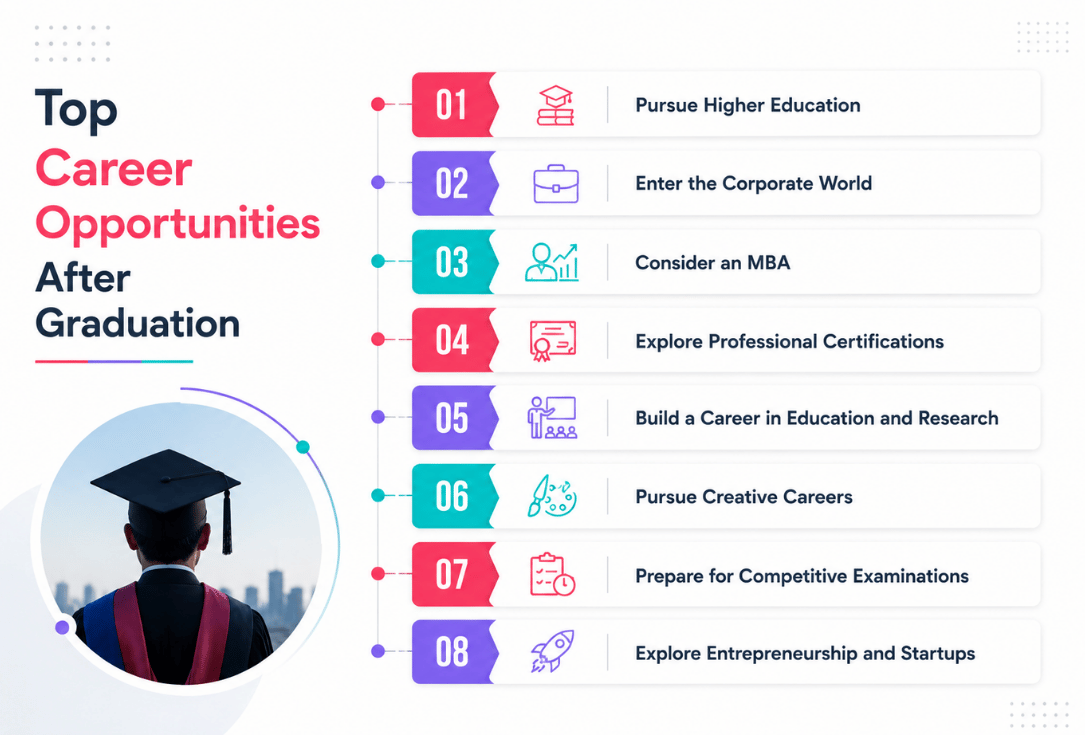
1. Pursue Higher Education
One of the most common paths after graduation is continuing your studies through postgraduate programs.
For example:
- B.Tech graduates may pursue M.Tech or specialized technology programs.
- B.Com graduates often opt for M.Com, MBA, CA, CFA, or other finance-related qualifications.
- Science graduates can pursue MSc programs or research-focused careers.
Higher education helps students deepen their expertise, improve employability, and open doors to leadership and specialized roles.
Many students are also exploring emerging fields such as Artificial Intelligence, Data Science, Cybersecurity, Business Analytics, and Product Management to align themselves with future workforce requirements.
2. Enter the Corporate World
Many graduates choose to begin their professional journey immediately after completing their degree.
Through campus placements, students can secure opportunities with leading organizations across industries. Many multinational corporations and IT companies actively recruit fresh graduates and provide structured training programs that help them build technical and professional skills.
Entry-level roles in technology, consulting, finance, operations, sales, human resources, and customer success provide valuable industry exposure and practical experience.
For students who want to gain hands-on learning and financial independence early in their careers, this can be an excellent option.
Modern organizations increasingly focus on skills-based hiring, making it important for graduates to demonstrate practical capabilities through assessments, projects, internships, and certifications.
3. Consider an MBA
Management education continues to be one of the most popular career choices after graduation.
An MBA provides exposure to multiple business functions such as:
- Marketing
- Finance
- Human Resources
- Operations
- Strategy
- Business Analytics
The program helps students develop leadership, communication, problem-solving, and decision-making skills that are highly valued across industries.
For graduates looking to move into managerial or leadership roles, an MBA can significantly accelerate career growth.
4. Explore Professional Certifications
Students interested in specialized domains can pursue professional qualifications that provide industry-recognized expertise.
Popular options include:
- Chartered Accountant (CA)
- Company Secretary (CS)
- Chartered Financial Analyst (CFA)
- ACCA
- Financial Risk Management (FRM)
- Data Analytics Certifications
- Cloud and Technology Certifications
These qualifications often lead to highly rewarding career opportunities and strong professional credibility.
5. Build a Career in Education and Research
Graduates who enjoy teaching, mentoring, and academic exploration can pursue careers in education.
Qualifications such as B.Ed, M.Ed, M.Phil, and PhD can open opportunities in schools, universities, research institutions, and educational organizations.
The education sector today offers far greater exposure than before, including international collaborations, research opportunities, and digital learning initiatives.
The integration of AI-powered learning platforms and personalized education technologies is also creating new opportunities within the education ecosystem.
6. Pursue Creative Careers
Not every successful career follows a traditional path.
Students with creative interests can explore opportunities in:
- Fashion Design
- Interior Design
- Film Making
- Content Creation
- Animation
- Graphic Design
- Digital Marketing
- User Experience Design
The creator economy and digital transformation have created exciting opportunities for individuals with creative and entrepreneurial mindsets.
7. Prepare for Competitive Examinations
Many graduates choose to pursue government careers through competitive examinations.
Opportunities exist across:
- Civil Services
- Banking
- Railways
- Public Sector Undertakings
- Defence Services
- State Government Roles
These careers often provide stability, structured growth, and the opportunity to contribute to public service.
8. Explore Entrepreneurship and Startups
The startup ecosystem has created exciting opportunities for graduates who want to build something of their own.
Many young professionals are launching businesses in areas such as:
- Technology
- E-commerce
- Education
- Fintech
- HealthTech
- Sustainability
- AI Solutions
Entrepreneurship allows graduates to transform ideas into businesses while developing leadership, problem-solving, and innovation skills.
Preparing for Career Success
Regardless of the path you choose, developing strong communication, technical, and interview skills is essential.
Students preparing for corporate roles can benefit from resources such as the interview preparation guide to strengthen their readiness and boost confidence before interviews and assessments.
Continuous learning, networking, and practical experience can significantly improve career outcomes in any field.
Platforms like Talent Titan help students identify strengths, assess skills, prepare for interviews, explore career options, and gain personalized insights that support informed career decisions.
Final Thoughts
There is no single “best” career path after graduation.
Some students thrive in higher education, others succeed in corporate careers, professional certifications, entrepreneurship, research, or creative industries. The most important step is identifying what genuinely interests you and taking action toward that goal.
Rather than overthinking every decision, focus on gaining experience, building skills, and continuously learning. Careers are rarely linear, and the most successful professionals often discover new opportunities along the way.
The future belongs to professionals who remain adaptable, continuously upskill themselves, and embrace emerging opportunities created by technology and innovation.
At Talent Titan, students can explore career options, participate in assessments, build skills, connect with peers, and gain valuable insights that help them make informed career decisions.
Other Articles

Beyond the Script: Using AI to Master Behavioral Interview Questions
How to Tackle C++ Coding Interview Questions with Confidence
The Secret to Answering Industry-Specific Interview Questions
How to prepare for domain-specific hiring questions across finance, tech, and healthcare.
Ready to Discover Your Ideal Career Path?
Assess your strengths, explore opportunities, and prepare for future-ready careers with Talent Titan.