

Introduction
The business landscape continues to evolve, and so do the expectations of employees, customers, and investors. Organizations are no longer judged solely by their financial performance. Today, people want to know what a company stands for, how it treats its employees, and the impact it creates beyond profits.
As a result, purpose-driven organizations have become a defining feature of long-term business success. Companies that align their business goals with meaningful social, environmental, and employee-focused initiatives are better positioned to build trust, drive growth, and remain competitive in an increasingly dynamic job market
As workforce expectations evolve and organizations adopt AI-powered talent strategies, purpose has become a critical differentiator that influences employer branding, talent acquisition, employee engagement, and long-term business resilience.
Understanding Purpose-Driven Organizations
A purpose-driven organization places its mission at the center of everything it does. While profitability remains important, these organizations recognize that sustainable success comes from creating value for customers, employees, communities, and stakeholders alike.
Purpose-driven businesses go beyond short-term gains and actively contribute to solving real-world challenges. Whether it’s promoting employee well-being, supporting environmental sustainability, encouraging diversity and inclusion, or investing in community development, these organizations strive to create a positive impact while achieving business objectives.
In today’s skills-driven economy, organizations are increasingly recognizing that purpose is not separate from performance. Instead, it serves as the foundation for stronger cultures, better employee experiences, and more effective workforce strategies.
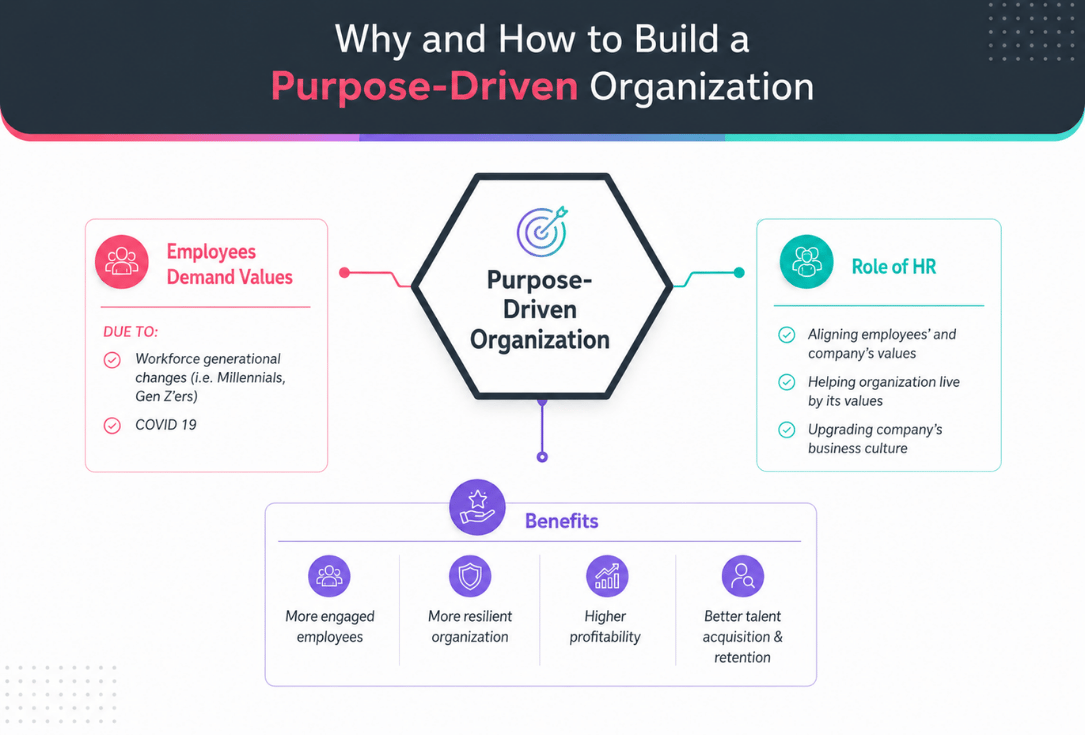
The Power of Purpose
Positive Impact on Business Performance
Contrary to the belief that purpose and profitability are separate goals, organizations that prioritize long-term value creation often achieve stronger business outcomes. A clear purpose helps organizations make better decisions, build customer trust, and foster stronger stakeholder relationships.
Attracting and Retaining Top Talent
Today’s workforce is looking for more than just a paycheck. Employees want meaningful work and opportunities to contribute to something larger than themselves. Purpose-driven organizations have a significant advantage when it comes to attracting top talent, improving employee satisfaction, and increasing retention rates.
As organizations compete for skilled professionals, purpose has become an important factor influencing candidate decisions alongside compensation, flexibility, growth opportunities, and workplace culture.
Enhanced Brand Reputation
Consumers are increasingly conscious of the brands they support. They are more likely to engage with organizations that align with their values and demonstrate a genuine commitment to social responsibility. A strong purpose helps businesses build credibility, strengthen customer loyalty, and improve brand perception.
Long-Term Resilience and Adaptability
Organizations with a clear purpose are often better equipped to navigate uncertainty and market disruptions. Purpose acts as a guiding principle during periods of change, helping leaders make consistent decisions while remaining focused on long-term goals.
Stronger Employee Engagement
Employees who understand how their work contributes to a larger mission are often more motivated, productive, and committed to organizational success.
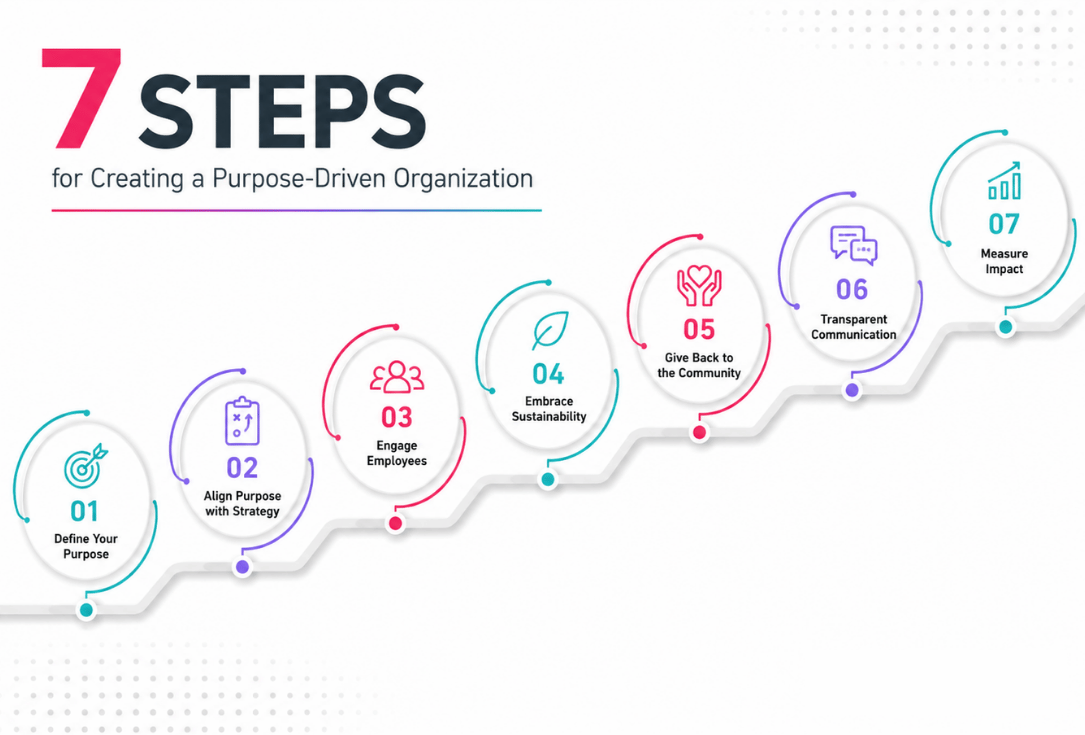
Creating a Purpose-Driven Organization
Define Your Purpose
The first step is identifying the core reason your organization exists beyond generating profits. Your purpose should reflect the positive impact you want to create for employees, customers, and society. Involving key stakeholders in this process helps build alignment and commitment.
Align Purpose with Strategy
Purpose should not exist separately from business strategy. It should influence decision-making across every function, from hiring and product development to customer experience and long-term growth planning.
Purpose should also influence workforce planning, leadership development, learning initiatives, and talent acquisition strategies to ensure organizational values are reflected throughout the employee lifecycle.
Engage and Empower Employees
Employees are essential to bringing purpose to life. Organizations should create opportunities for employees to contribute ideas, participate in decision-making, and understand how their work supports the company’s mission.
Modern learning and development platforms, personalized growth pathways, and continuous feedback mechanisms can help employees feel more connected to organizational goals and purpose-driven outcomes.
Embrace Sustainability
Environmental sustainability continues to be a critical component of responsible business practices. Organizations can strengthen their impact by reducing waste, improving operational efficiency, and adopting sustainable initiatives that support long-term growth.
Give Back to the Community
Purpose-driven organizations actively contribute to the communities they serve. This may include supporting charitable causes, educational initiatives, volunteering programs, or partnerships that create meaningful social impact.
Practice Transparent Communication
Transparency builds trust. Organizations should communicate openly about their goals, achievements, challenges, and progress toward purpose-driven initiatives. Authentic communication strengthens credibility with employees, customers, and stakeholders.
Measure Impact
To ensure accountability, organizations should establish clear metrics that track progress toward their purpose-driven goals. Measuring employee engagement, customer satisfaction, sustainability outcomes, and community impact helps demonstrate meaningful results and identify opportunities for improvement.
Data-driven insights and workforce analytics can further help organizations understand the effectiveness of their engagement, development, and purpose-driven initiatives.
Looking Ahead
The future of work will be shaped by organizations that successfully combine business performance with purpose. As technology, artificial intelligence, and workforce expectations continue to evolve, companies that create meaningful employee experiences and maintain a clear sense of purpose will be better positioned to attract talent, build loyalty, and sustain growth.
Organizations that invest in skills development, employee well-being, inclusive cultures, and purpose-driven leadership will be better equipped to navigate future workforce challenges while creating lasting value for all stakeholders.
Other Articles

Beyond the Script: Using AI to Master Behavioral Interview Questions
How to Tackle C++ Coding Interview Questions with Confidence
The Secret to Answering Industry-Specific Interview Questions
How to prepare for domain-specific hiring questions across finance, tech, and healthcare.
Ready to Build a Purpose-Driven Workforce?
Empower your teams with smarter hiring, continuous learning, and employee development strategies that align talent with organizational purpose and long-term growth.