
How to Hire the Best Talent Through a Seamless and Effective Recruitment Process

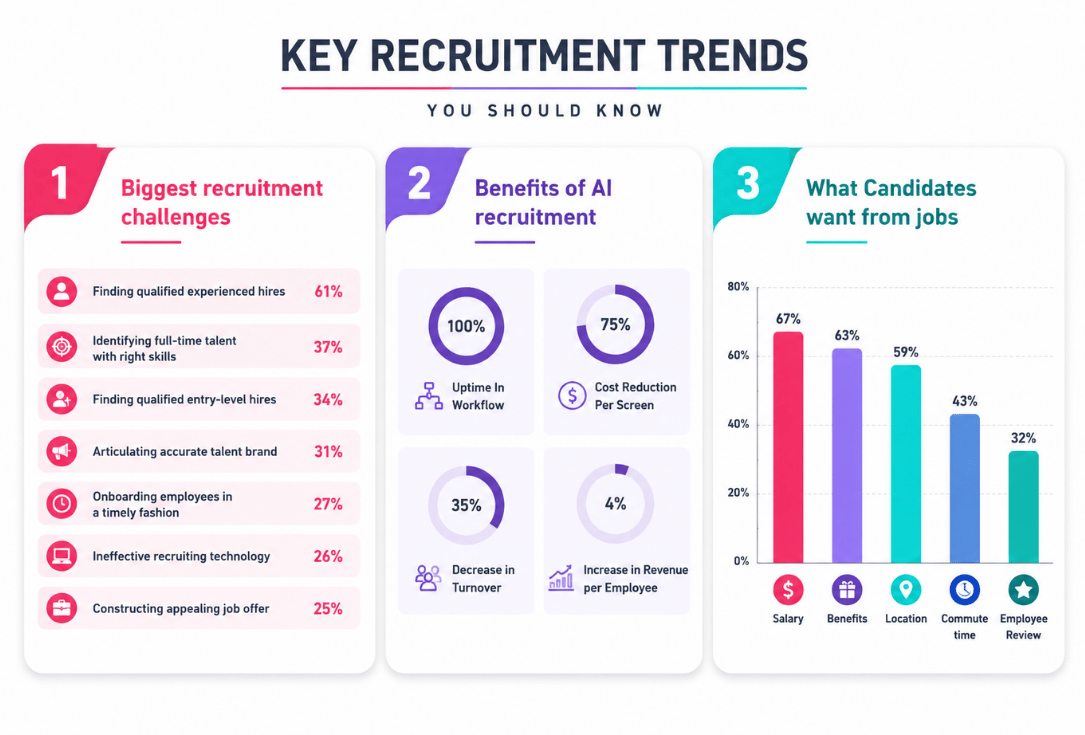
The recruitment landscape has changed dramatically over the past decade. Organizations are no longer the only ones evaluating candidates. Today’s professionals carefully assess employers, workplace culture, growth opportunities, flexibility, and employee experience before deciding where they want to work.
In a competitive talent market, attracting and hiring the best candidates requires more than posting a job opening and conducting interviews. Organizations need a recruitment process that is structured, engaging, efficient, and candidate-centric.
Today, leading organizations are also embracing Agentic AI, recruitment automation, and hiring intelligence to streamline workflows, improve hiring accuracy, and create better experiences for both recruiters and candidates.
A well-designed recruitment process helps organizations identify the right talent faster, reduce hiring costs, improve candidate experiences, and increase the likelihood of long-term employee success.
Let’s explore the key stages of building a seamless and effective recruitment process.
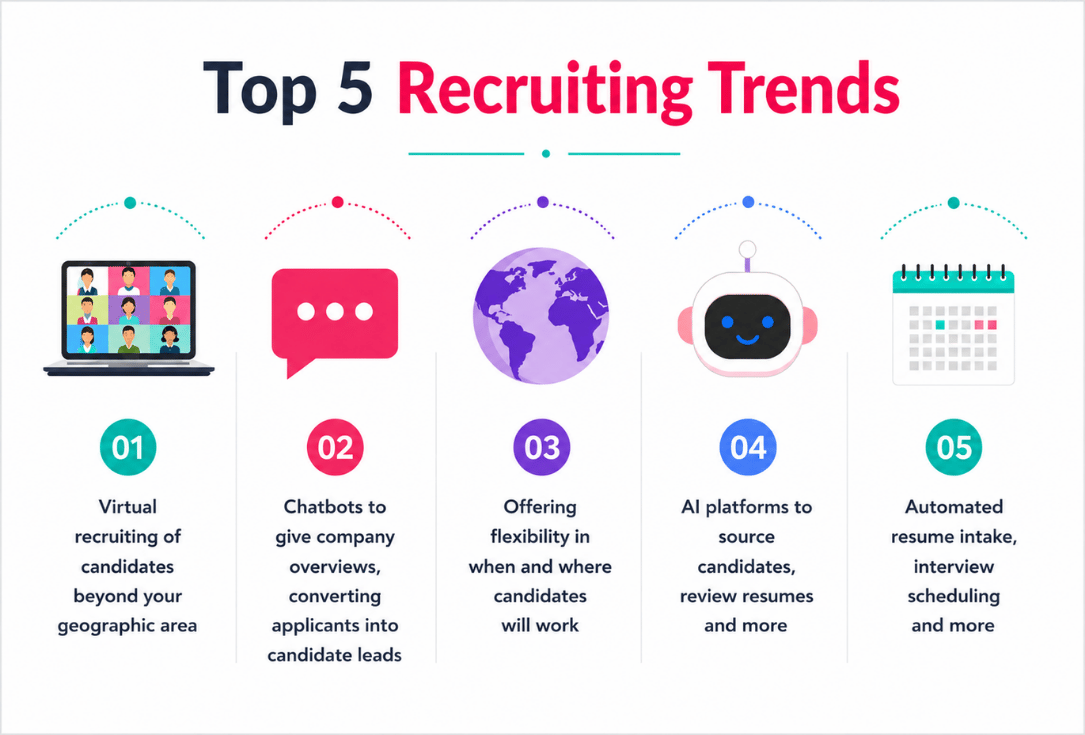
What Is a Recruitment Process?
The recruitment process begins when an organization identifies a hiring need and ends when a candidate successfully joins the company.
While the exact workflow varies across organizations, a modern recruitment process typically includes:
- Job marketing and employer branding
- Candidate sourcing
- Resume screening
- Assessments and evaluations
- Interviews
- Reference verification
- Offer management
- Onboarding
Each stage plays an important role in ensuring organizations hire the right talent while creating a positive experience for candidates.
When supported by intelligent recruitment technology, these stages become more connected, measurable, and scalable, enabling organizations to make faster and more confident hiring decisions.
Step 1: Market Your Job Effectively
The first challenge in hiring is attracting the right candidates.
Even the best recruitment process cannot succeed if qualified candidates never discover the opportunity.
Organizations must think of recruitment as a marketing exercise. Just as businesses market products to customers, employers must promote your job opportunities to the right audience and communicate why talented professionals should choose their organization.
In today’s competitive talent landscape, employer branding has become just as important as compensation. Candidates often research organizations extensively before deciding whether to apply.
Build a Strong Employer Brand
Candidates today research organizations extensively before applying.
They explore company websites, social media channels, employee reviews, leadership profiles, and workplace culture.
Organizations should actively showcase:
- Company values
- Employee success stories
- Growth opportunities
- Learning initiatives
- Diversity and inclusion efforts
- Workplace culture
A strong employer brand helps attract higher-quality candidates and improves application rates.
Use Multiple Recruitment Channels
Successful hiring strategies leverage multiple sourcing channels, including:
- Job portals
- Professional networking platforms
- Employee referrals
- Talent communities
- Industry forums
- Social media platforms
The objective is to reach candidates where they already spend their time.
Create a Clear Job Description
Job descriptions should clearly communicate:
- Responsibilities
- Required skills
- Expectations
- Growth opportunities
- Benefits
- Application process
The more clarity candidates have, the more likely they are to self-assess their suitability before applying.
Invest in a Strong Career Site
A well-curated career page often becomes the deciding factor for potential applicants.
Candidates want to understand how the organization operates, what it stands for, and what they can expect throughout the hiring process.
An effective career page should provide:
- Company information
- Open positions
- Employee testimonials
- Hiring process details
- Frequently asked questions
- Employer branding content
Engage Passive Talent
The best candidates are not always actively looking for jobs.
Modern recruitment strategies involve attracting individuals who make for a good fit even when they are not actively applying.
Building talent communities, maintaining employer visibility, and nurturing long-term candidate relationships help organizations create stronger talent pipelines for future opportunities.
Step 2: Streamline Resume Screening
Once applications start arriving, recruiters face the challenge of reviewing large volumes of resumes efficiently.
Manual screening is time-consuming and often inconsistent.
Modern recruitment teams increasingly rely on technology to improve efficiency.
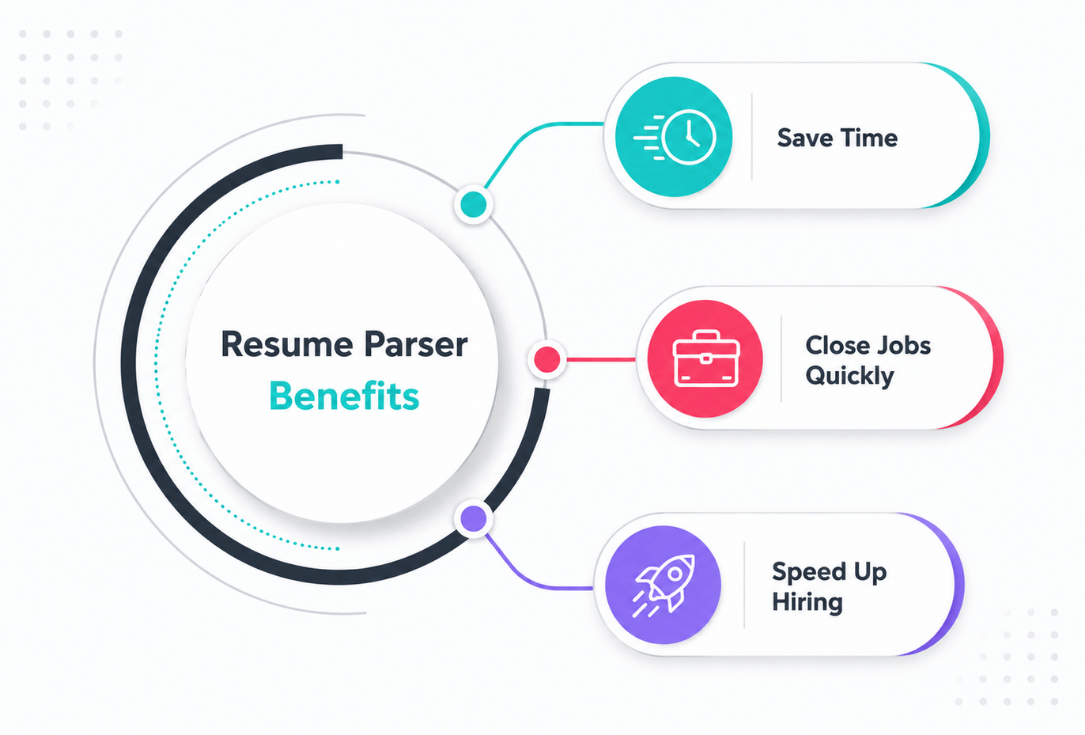
Today, AI-powered tools can parse resumes and automatically evaluate candidate profiles against predefined criteria.
These systems help recruiters:
- Identify qualified candidates faster
- Eliminate manual screening efforts
- Improve consistency
- Reduce unconscious bias
- Accelerate hiring timelines
Resume parsing technology can analyze skills, experience, certifications, education, and job relevance within seconds, allowing recruiters to focus on high-potential candidates.
Modern AI-powered recruitment platforms can also identify transferable skills, rank candidates against job requirements, and surface high-potential talent that may otherwise be overlooked.
Step 3: Assess Skills Before Interviews
Resumes only tell part of the story.
The most effective recruitment processes evaluate candidates based on demonstrated capabilities rather than assumptions.
Pre-screening assessments help recruiters understand whether candidates possess the technical, cognitive, behavioral, and functional skills required for success.
Organizations increasingly use:
- Technical skill assessments
- Cognitive ability tests
- Aptitude assessments
- Personality evaluations
- Communication assessments
- Leadership assessments
Assessment-driven hiring helps improve accuracy and reduce the risk of costly hiring mistakes.
Skills-based hiring is becoming increasingly important as organizations move beyond traditional resume screening and focus on actual capabilities, potential, and job readiness.
Make Hiring More Engaging Through Challenges
Traditional hiring methods are not always the best way to identify exceptional talent.
Organizations looking for highly skilled professionals often use innovation-driven recruitment methods such as:
- Coding competitions
- Case study challenges
- Innovation contests
- Business simulations
- Hackathons
Need exceptional technology talent?
These events allow candidates to demonstrate real-world problem-solving abilities while giving recruiters deeper insights into their technical expertise, creativity, collaboration skills, and performance under pressure.
At the same time, such initiatives strengthen employer branding and generate excitement around hiring opportunities.
Step 4: Leverage Modern Interview Technologies
Interviews remain one of the most important stages of recruitment.
However, conducting live interviews for every candidate can be resource-intensive, especially when hiring at scale.
This is why many organizations now incorporate one-way interview solutions into their recruitment workflows.
One-way interviews allow candidates to record responses to structured questions at their convenience.
Recruiters can then review responses asynchronously and evaluate:
- Communication skills
- Technical knowledge
- Professional presence
- Time management
- Problem-solving capabilities
This approach helps organizations screen larger candidate pools while maintaining consistency across evaluations.
Modern AI-powered interview platforms can also generate insights that support more informed hiring decisions.
Conversational AI interviews are also gaining traction, allowing organizations to evaluate larger candidate pools while maintaining consistency, objectivity, and candidate engagement.
Step 5: Conduct Structured Personal Interviews
Once candidates successfully complete assessments and preliminary evaluations, they move to the personal interview stage.
Structured interviews are significantly more effective than unstructured conversations because they ensure every candidate is evaluated against consistent criteria.
Interview discussions should focus on:
- Role-specific competencies
- Problem-solving abilities
- Behavioral indicators
- Team collaboration
- Cultural alignment
- Career aspirations
Organizations should also use this opportunity to answer candidate questions and showcase the value of joining the company.
Remember, interviews are a two-way evaluation process.
Candidates are evaluating employers just as much as employers are evaluating candidates.
Step 6: Verify References and Extend Offers
After identifying the preferred candidate, organizations should conduct reference checks to validate information and gain additional insights into previous performance.
Reference verification can help confirm:
- Work history
- Professional conduct
- Leadership capabilities
- Team collaboration
- Reliability
Once verification is complete, organizations should present a clear and transparent offer.
The offer process should include:
- Compensation details
- Benefits information
- Joining timelines
- Role expectations
- Career growth opportunities
Clear communication at this stage reduces uncertainty and improves offer acceptance rates.
Step 7: Create an Exceptional Onboarding Experience
Recruitment does not end when a candidate accepts an offer.
The period between offer acceptance and joining is often where organizations lose promising candidates.
A strong candidate onboarding experience helps maintain engagement, build excitement, and improve joining rates.
Organizations should:
- Maintain regular communication
- Share company information
- Introduce team members
- Provide pre-boarding resources
- Clarify joining expectations
An effective onboarding experience creates a positive first impression and helps employees become productive more quickly.
Organizations are increasingly using AI-powered engagement tools during pre-boarding to reduce candidate drop-offs and maintain excitement between offer acceptance and joining day.
Why Recruitment Technology Matters
As organizations grow, recruitment becomes increasingly complex.
Manual processes can slow down hiring, increase costs, and negatively impact candidate experiences.
Technology helps organizations:
- Automate repetitive tasks
- Improve screening accuracy
- Reduce hiring timelines
- Enhance candidate engagement
- Generate hiring insights
- Improve decision-making
Organizations that embrace AI, automation, analytics, and recruitment intelligence are better positioned to attract and retain top talent.
The emergence of Agentic AI is further transforming recruitment by enabling intelligent AI agents to automate workflows, coordinate hiring activities, generate hiring insights, and support recruiters throughout the talent acquisition lifecycle.
How Talent Titan Simplifies Recruitment
A Connected Ecosystem of AI Agents
Talent Titan’s specialized AI agents work together to streamline recruitment operations:
- TARA helps organizations attract and source talent across multiple channels.
- GEMMA transforms career pages into intelligent candidate engagement hubs.
- MERITA enables skills-based hiring through AI-powered assessments.
- OWVIE facilitates structured one-way video interviews.
- RIVIA conducts conversational AI interviews that dynamically adapt to candidate responses.
- ALIGNOR automates interview scheduling and coordination.
- ANA generates hiring intelligence and decision-support insights.
- CERA maintains candidate engagement during pre-boarding and onboarding.
- LUMA supports employee learning, development, and workforce growth after hiring.
The platform offers:
- AI-powered sourcing solutions
- Resume parsing technology
- Skill-based assessments
- Coding evaluations
- Interview intelligence
- Analytics and reporting
- ATS integrations
- Candidate engagement tools
Organizations also gain access to Talent Titan’s best assessment tool, designed to evaluate technical, cognitive, behavioral, and functional competencies through scientifically validated frameworks.
Combined with AI-powered hiring intelligence, recruiters can identify top talent with greater confidence and accuracy.
Final Thoughts
Hiring the right talent is one of the most important decisions any organization can make.
A seamless recruitment process helps organizations attract better candidates, improve hiring outcomes, reduce costs, and create stronger employee experiences.
From employer branding and sourcing to assessments, interviews, onboarding, and analytics, every stage of recruitment contributes to long-term hiring success.
Organizations that embrace technology, data-driven decision-making, and candidate-centric hiring practices will be best positioned to compete in today’s talent market.
As recruitment becomes increasingly skills-driven, organizations need intelligent platforms that can connect sourcing, assessments, interviews, onboarding, and workforce development into a single ecosystem.
With HIRA and its ecosystem of specialized AI agents, Talent Titan enables organizations to build a faster, smarter, and more effective recruitment process that consistently delivers exceptional talent. By combining Agentic AI, skills-based hiring, intelligent assessments, conversational interviews, recruitment analytics, and candidate engagement, Talent Titan helps organizations transform every stage of the talent acquisition lifecycle.
Other Articles
Beyond the Script: Using AI to Master Behavioral Interview Questions
How to Tackle C++ Coding Interview Questions with Confidence
The Secret to Answering Industry-Specific Interview Questions
How to prepare for domain-specific hiring questions across finance, tech, and healthcare.
Ready to Transform Recruitment with Agentic AI?
From sourcing and assessments to interviews, onboarding, and workforce development, Talent Titan’s AI agents help organizations hire smarter, faster, and at scale.