
New-Age Hiring Assessment Solutions: The Future of Smarter Recruitment

The recruitment landscape has changed dramatically over the past decade. Organizations are no longer relying solely on resumes, aptitude tests, and traditional interviews to evaluate talent. As technology continues to transform every aspect of business, hiring has evolved into a more data-driven, efficient, and candidate-centric process.
Today, artificial intelligence, automation, analytics, gamification, and remote assessment technologies are helping organizations identify the right talent faster and more accurately than ever before. These innovations not only improve hiring efficiency but also enhance candidate experience and reduce the risks associated with poor hiring decisions.
Among these innovations, assessment solutions have emerged as one of the most valuable tools in modern recruitment. They enable employers to evaluate candidates based on actual skills, competencies, and behavioral traits rather than relying solely on resumes or interview impressions.
The Growing Importance of Assessments in Hiring
Recruiters face a common challenge: resumes often fail to provide a complete picture of a candidate’s capabilities. While resumes offer valuable information about experience and qualifications, they do not always accurately reflect an individual’s skills, problem-solving abilities, adaptability, or cultural fit.
This is where hiring assessments play a crucial role.
Modern assessments help organizations evaluate candidates objectively and consistently. They provide measurable insights into technical expertise, cognitive abilities, personality traits, communication skills, and behavioral tendencies.
More importantly, assessments help recruiters make informed hiring decisions while reducing bias and improving fairness across the recruitment process.
The benefits of incorporating assessments into hiring include:
- Faster candidate screening
- Improved hiring accuracy
- Reduced recruitment costs
- Better cultural alignment
- Lower employee turnover
- Enhanced candidate experience
- More objective decision-making
By evaluating candidates before interviews, organizations can focus their attention on individuals who are most likely to succeed in the role.
How Assessments Improve Recruitment Outcomes
Assessment-driven hiring goes beyond evaluating technical knowledge.
Modern hiring assessments can help organizations understand:
- Leadership potential
- Communication abilities
- Teamwork and collaboration skills
- Adaptability and resilience
- Critical thinking capabilities
- Problem-solving approaches
- Learning agility
- Emotional intelligence
These insights help recruiters identify candidates who are not only capable of performing the job but are also likely to thrive within the organization’s culture and long-term objectives.
In addition, assessments provide legal defensibility and standardization by ensuring all candidates are evaluated using the same criteria.
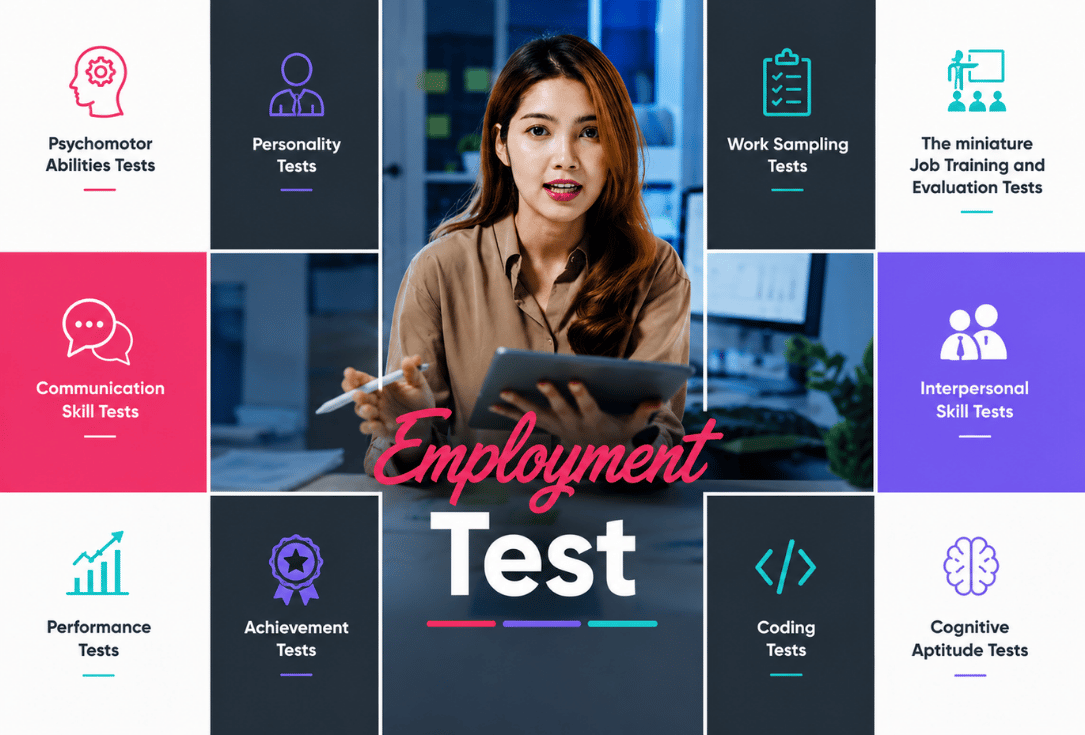
Different Types of Hiring Assessments
Organizations use a variety of assessments depending on the role, industry, and hiring objectives.
Personality Assessments
Personality assessments help employers understand how candidates are likely to behave in workplace situations.
These tests evaluate traits such as:
- Collaboration
- Leadership
- Dependability
- Initiative
- Communication style
- Conflict management
Understanding personality characteristics helps organizations determine whether a candidate aligns with team dynamics and company culture.
Job Knowledge Assessments
Job knowledge assessments evaluate a candidate’s understanding of specific subject areas related to the role.
These tests are particularly useful for positions requiring specialized expertise, certifications, or domain knowledge.
They help employers verify whether candidates possess the required knowledge to perform effectively from day one.
Integrity Assessments
Integrity assessments measure ethical judgment, honesty, reliability, and workplace responsibility.
These evaluations help organizations identify individuals who demonstrate strong professional values and are likely to make sound decisions in challenging situations.
Cognitive Ability Assessments
Cognitive assessments evaluate a candidate’s ability to process information, solve problems, learn new concepts, and think critically.
Common areas assessed include:
- Logical reasoning
- Numerical reasoning
- Verbal reasoning
- Analytical thinking
- Decision-making
Research consistently shows that cognitive ability is one of the strongest predictors of job performance across multiple industries.
Emotional Intelligence Assessments
Technical skills alone are not enough for workplace success.
Emotional intelligence assessments measure a candidate’s ability to understand emotions, build relationships, manage conflict, and collaborate effectively with others.
These assessments provide insights into:
- Empathy
- Self-awareness
- Adaptability
- Teamwork
- Communication
- Leadership potential
Organizations increasingly use emotional intelligence assessments to identify future leaders and improve workforce collaboration.
Skills-Based Evaluations
One of the most widely adopted assessment methods today is the use of skill assessment tests.
These evaluations focus on measuring a candidate’s ability to perform tasks directly related to the role.
Examples include:
- Sales simulations
- Writing assignments
- Data analysis exercises
- Presentation assessments
- Customer service scenarios
- Marketing case studies
By evaluating practical skills, organizations gain a more realistic understanding of candidate capabilities.
Coding Assessments
Technology hiring requires specialized evaluation methods.
Coding assessments help employers evaluate programming knowledge, coding efficiency, architectural thinking, debugging skills, and problem-solving capabilities.
These assessments are especially valuable when hiring software developers, engineers, data scientists, and technology professionals.
Latest Trends Shaping Hiring Assessments
As recruitment evolves, assessment technologies continue to become more sophisticated and candidate-friendly.
1. The Shift from Traditional Testing to Digital Assessments
Paper-based assessments are rapidly disappearing.
Digital assessment platforms offer significant advantages, including:
- Faster administration
- Instant results
- Better reporting
- Improved scalability
- Enhanced security
- Greater accessibility
Online assessments allow organizations to evaluate candidates from anywhere in the world while reducing administrative overhead.
Modern assessment platforms also provide customizable evaluation frameworks tailored to specific job roles and hiring requirements.
2. Remote Proctoring and Online Monitoring
Remote hiring has accelerated the adoption of online proctoring technologies.
Organizations can now conduct secure assessments using video, audio, screen monitoring, and AI-powered fraud detection systems.
Remote proctoring enables organizations to maintain assessment integrity while providing candidates with greater flexibility and convenience.
This approach significantly expands access to talent beyond geographical boundaries.
3. Gamification in Assessments
One of the most exciting developments in recruitment is the use of gamification.
Traditional assessments often feel repetitive and stressful for candidates. Gamified assessments create a more engaging experience while generating deeper insights into behavior and performance.
By incorporating quizzes or challenges, organizations can evaluate problem-solving abilities, decision-making skills, creativity, and adaptability in a more natural environment.
Gamification also improves candidate participation rates and strengthens employer branding by creating memorable recruitment experiences.
4. The Rise of Video-Based Candidate Evaluation
Many organizations are now turning to one-way interviews as part of their hiring strategy.
One-way interviews allow candidates to record responses to pre-defined questions at their convenience.
Recruiters can then review responses asynchronously, improving efficiency while maintaining consistency across evaluations.
Benefits include:
- Faster screening
- Greater flexibility
- Improved collaboration among hiring teams
- Expanded candidate reach
- Standardized evaluation processes
This approach is particularly valuable for high-volume recruitment and geographically distributed hiring.
5. AI and Recruitment Automation
Artificial intelligence is playing an increasingly important role in hiring assessments.
Modern recruitment automation technologies help organizations:
- Screen applications
- Rank candidates
- Analyze assessments
- Generate insights
- Improve workflow efficiency
Rather than replacing recruiters, AI augments human decision-making by providing objective and data-backed recommendations.
Automation reduces repetitive tasks and allows recruiters to focus on relationship-building and strategic hiring initiatives.
6. Candidate-Centric Assessments
The best hiring experiences are designed around the candidate.
Modern assessment strategies prioritize engagement, transparency, accessibility, and convenience.
Organizations are moving away from lengthy, rigid evaluation processes and embracing interactive experiences that provide candidates with opportunities to showcase their abilities.
Many organizations also use assessment platforms to streamline the onboarding process by maintaining engagement between offer acceptance and joining dates.
This creates a smoother transition from candidate to employee.
Benefits of New-Age Online Assessments
Online assessment platforms offer significant advantages for both employers and candidates.
Faster Hiring
Automated assessments reduce screening time and accelerate hiring decisions.
Cost Efficiency
Virtual assessments eliminate the logistical costs associated with physical testing centers and manual administration.
Improved Accessibility
Candidates can participate from any location, helping organizations access broader talent pools.
Better Candidate Experience
Flexible scheduling and interactive assessment formats create a more positive recruitment experience.
Data-Driven Decision Making
Assessment platforms generate actionable insights that support objective hiring decisions.
Talent Titan's Assessment Solutions
Talent Titan has been at the forefront of transforming assessments through artificial intelligence, automation, and gamification.
The platform combines technology-driven evaluation methods with candidate-friendly experiences to help organizations identify top talent efficiently.
Key capabilities include:
- AI-powered gamified assessments
- Role-specific evaluation frameworks
- Technical and functional skill assessments
- Behavioral and cognitive evaluations
- Coding assessments through Codelyzer
- Interview intelligence solutions
- ATS integration
- Advanced hiring analytics
Talent Titan also supports virtual video and coding interviews that enable organizations to evaluate candidates remotely while maintaining consistency and quality.
The platform’s extensive assessment library helps recruiters customize evaluations based on role requirements, experience levels, and business objectives.
Combined with AI-driven insights and analytics, organizations can make faster, smarter, and more confident hiring decisions.
To Sum Up
The future of hiring is increasingly driven by data, technology, and candidate experience.
Organizations can no longer rely solely on resumes and traditional interviews to identify the best talent. Modern hiring demands objective evaluations, engaging experiences, and intelligent decision-making tools.
New-age assessment solutions provide organizations with the ability to evaluate skills, competencies, behaviors, and potential at scale while reducing bias and improving hiring outcomes.
As businesses continue to compete for top talent, assessment platforms powered by AI, automation, gamification, and analytics will become an essential component of successful recruitment strategies.
Talent Titan combines these capabilities into a comprehensive hiring ecosystem that helps organizations build stronger teams while delivering a faster, smarter, and more engaging recruitment experience for candidates.
Other Articles
Beyond the Script: Using AI to Master Behavioral Interview Questions
How to Tackle C++ Coding Interview Questions with Confidence
The Secret to Answering Industry-Specific Interview Questions
How to prepare for domain-specific hiring questions across finance, tech, and healthcare.
Ready to Transform Hiring Assessments with Agentic AI?
Leverage AI-powered assessments, intelligent interviews, hiring analytics, and workforce insights to identify top talent faster and make more confident hiring decisions.